
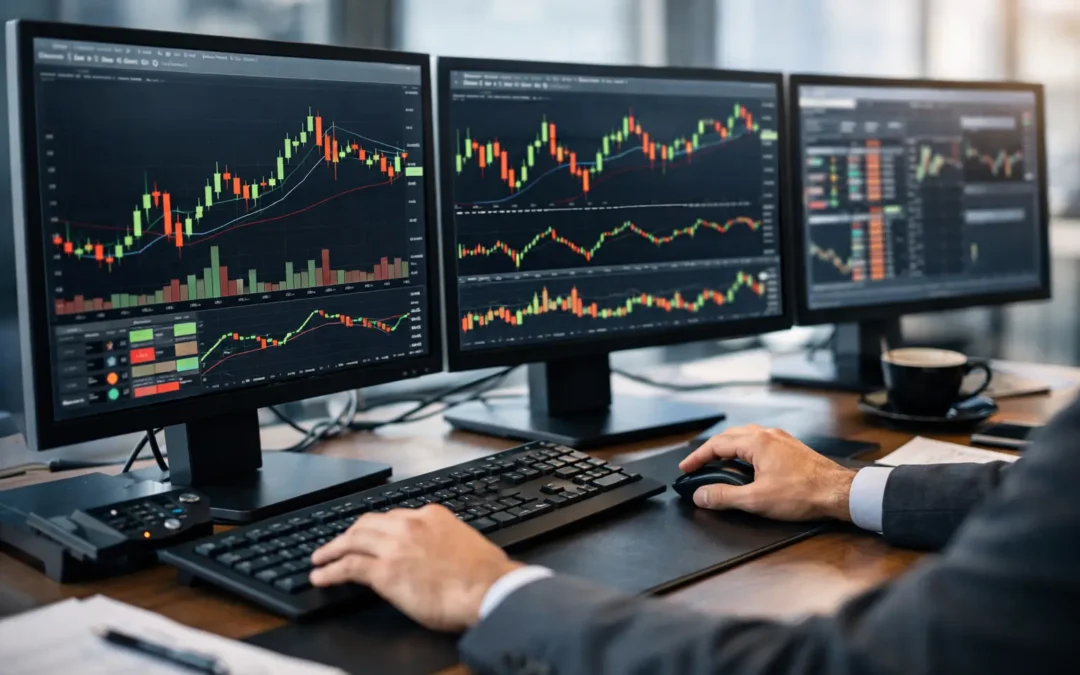
A market can move 10 points in NQ before most traders finish second-guessing the setup. That is exactly why so many active traders ask, what is futures scalping? It is a short-term trading approach built around taking small, precise moves in futures contracts, often on the 1-minute or 5-minute chart, with tight risk and fast decision-making. The goal is not to sit through an all-day swing. The goal is to identify a high-probability entry, define the stop, take the move, and move on.
For the right trader, scalping is exciting and highly tactical. For the wrong trader, it becomes random clicking dressed up as strategy. That distinction matters. Futures scalping is not just trading fast. It is trading with structure.
What is futures scalping?
At its core, futures scalping means entering and exiting futures trades quickly to capture small price movements. A scalper might hold a position for seconds or a few minutes, sometimes a little longer if momentum stays clean. The focus is on repeatable setups, exact entries, and disciplined exits.
This style is common in markets like NQ, ES, GC, and CL because they offer liquidity, movement, and frequent intraday opportunities. Instead of aiming for a huge trend that takes hours to develop, the scalper is looking for a smaller section of the move that can be executed with precision.
That precision is where many traders either build consistency or fall apart. In a scalping environment, entry quality matters more than most people realize. A late entry can wreck the risk-reward. A sloppy stop can turn a controlled trade into a problem fast.
Why traders are drawn to futures scalping
The appeal is obvious. Futures markets can move quickly, offer leverage, and produce multiple setups in a single session. If you like active participation and clear execution, scalping feels more direct than waiting all day for one swing trade to unfold.
There is also a psychological advantage for some traders. You get feedback fast. The market tells you quickly whether your read is right or wrong. That can help disciplined traders improve faster because every session produces data – not theory, not opinions, but actual entries, exits, and outcomes.
Still, speed is not automatically an edge. Traders are drawn to scalping because it looks efficient, but the real edge comes from reading momentum, recognizing reversals, and managing risk under pressure. Without that, fast trading just accelerates mistakes.
How futures scalping actually works
A scalper usually starts with a specific instrument, a defined time window, and a narrow set of setups. That might mean trading the morning session only, focusing on NQ or ES, and taking entries when momentum confirms a trend continuation or a reversal signal appears at a key level.
The process is tighter than many beginners expect. You are not watching ten markets and guessing. You are looking for conditions you already understand. That may include trend alignment, volatility expansion, pullbacks into support or resistance, or reversal patterns that show buyers or sellers losing control.
Once the setup appears, the trader enters with a pre-planned stop-loss. This is not optional. In scalping, stops are part of the trade design. Because targets are often smaller than in swing trading, poor stop placement can destroy the math. Good scalpers know where the trade is wrong before they click the button.
Profit targets vary. Some traders take a fixed number of ticks. Others scale out or trail behind price structure if momentum stays strong. It depends on the market and the setup. NQ may demand a different approach than GC or CL because the rhythm and volatility are different.
What is futures scalping on a 1-minute chart?
When traders ask what is futures scalping on a 1-minute chart, they are usually asking about the most aggressive version of this style. On a 1-minute chart, information comes fast. Candles print quickly, momentum shifts can be sharp, and hesitation costs money.
That does not mean every 1-minute move is tradable. In fact, one of the biggest mistakes new scalpers make is treating every candle like a signal. High-level scalping is selective. The chart may be moving constantly, but a professional trader waits for clean structure, clear confirmation, and a risk level that makes sense.
This is where indicator-driven trading can help. A strong scalping framework does not replace judgment, but it can sharpen it. Trend signals, reversal cues, and exact entry zones can help traders filter noise and focus on trades with a defined reason behind them. That is one reason many active traders prefer a system-based approach over trying to interpret raw price action alone.
The core skills a futures scalper needs
Scalping rewards discipline more than excitement. You need the ability to make a decision, accept a stop, and move to the next setup without emotional drag. Traders who freeze, chase, or widen risk usually struggle.
You also need chart awareness. That includes understanding when the market is trending, when it is chopping sideways, and when volatility is too thin or too wild for your strategy. A great setup in a clean market can become a weak setup in a messy one.
Then there is execution. This is where many retail traders underestimate the game. It is one thing to recognize a setup after the move. It is another to enter in real time with confidence, place the stop correctly, and manage the trade without panic. Training, replay, and live chart review matter here because execution is a skill, not a personality trait.
The biggest trade-offs in futures scalping
Scalping offers speed, frequency, and opportunity. It also demands attention, consistency, and emotional control. That trade-off is real.
One major advantage is reduced overnight risk. Scalpers are typically flat by the end of the session, so they are not exposed to overnight news shocks the way swing traders can be. Another advantage is repetition. You may get several opportunities in a day rather than waiting days for one setup.
The downside is that transaction costs and execution quality matter more. Small targets leave less room for error. If your entries are late or your stops are inconsistent, the numbers can deteriorate quickly. Scalping can also be mentally draining. Watching fast markets for long stretches is not easy, and fatigue leads to poor decisions.
That is why futures scalping is not automatically better than swing trading or day trading with larger targets. It depends on your personality, schedule, account size, and ability to stay locked in.
Common mistakes new scalpers make
The first mistake is overtrading. Traders see movement and assume movement equals opportunity. It does not. Some of the worst trades happen in low-quality conditions where the market looks active but has no clean direction.
The second mistake is entering too late. In scalping, chasing price usually means buying after the edge is gone or selling after the flush already happened. If the setup requires confirmation, that confirmation has to be built into the plan, not used as an excuse to enter badly.
The third mistake is using wide stops with small targets. That math rarely holds up. A scalper needs alignment between entry, stop, and target. If the stop is large because the trader does not know where the trade is invalid, the setup probably is not clean enough.
The fourth mistake is relying on instinct without a framework. This is where many traders burn time and money. A cutting-edge indicator or signal system is not magic, but the right framework can dramatically improve consistency by giving traders clearer trend context, reversal recognition, and stop placement logic.
Who futures scalping fits best
Futures scalping fits traders who want active engagement with the market and are willing to train seriously. It tends to suit people who like structure, can follow rules under pressure, and prefer taking several controlled shots rather than waiting for a larger swing.
It is often a strong fit for traders focused on indexes and liquid futures products, especially those using chart-based systems on NinjaTrader or similar platforms. If you want exact entries, visual signals, and a process you can study and repeat, scalping can be a powerful path.
It is a weaker fit for traders who cannot monitor the screen, dislike quick decisions, or struggle to exit when the trade is clearly wrong. There is no shame in that. The market pays different styles. The key is matching the style to the trader.
A serious futures scalper does not chase action. They build a repeatable process around market timing, trade location, and risk control. That is where confidence starts to become measurable.
If you are asking what is futures scalping because you want more precision in markets like NQ, ES, GC, or CL, focus less on speed and more on structure. Fast hands do not create consistency. Clear signals, disciplined stops, and repeated execution do.